

Table of Contents Show
Introduction to Web Accessibility Standards
Accessibility standards are guidelines and regulations designed to ensure that individuals with disabilities can access and utilize various products and services effectively. These standards play a crucial role in both design and technology, offering a framework that promotes inclusivity and equality. By adhering to these standards, designers and developers can create environments that cater to the needs of all users, regardless of their physical or cognitive abilities.
The importance of accessibility standards cannot be overstated. They not only improve the user experience for people with disabilities but also enhance usability for all users. In the digital realm, for instance, accessibility standards help ensure that websites and applications are navigable and comprehensible to individuals with visual impairments, hearing impairments, or other conditions that may affect their interaction with technology. By integrating these principles into the design process, companies can foster greater engagement and satisfaction among their users.
As we look towards the future, the 2026 accessibility standards emerge as a significant milestone in this journey. These forthcoming regulations are poised to provide updated guidelines that reflect the continuing evolution of technology and societal norms. The legislative framework surrounding accessibility includes various regulations, such as the Americans with Disabilities Act (ADA) and Section 508 of the Rehabilitation Act. These laws mandate that organizations prioritize accessibility in their services and communications. With the introduction of the 2026 standards, there is an opportunity for further enhancement, ensuring that advances in technology lead to broader accessibility.
In summary, understanding accessibility standards is essential for fostering inclusive design practices that cater to diverse user needs. The 2026 standards represent an important step toward reinforcing these principles in all areas of technology and design, ultimately enriching the user experience for everyone.
History and Evolution of Accessibility Standards
The evolution of accessibility standards has been a gradual yet significant journey, characterized by the growing recognition of the rights of individuals with disabilities. The inception of accessibility regulations can be traced back to the late 20th century, where initial efforts focused on providing equal access to public facilities and services. The Americans with Disabilities Act (ADA), enacted in 1990, marked a pivotal moment in this journey, laying the groundwork for future accessibility legislation by prohibiting discrimination based on disability.
Following the ADA, the need for digital accessibility became increasingly apparent as the internet gained prominence. This led to the development of the Web Content Accessibility Guidelines (WCAG), initiated by the World Wide Web Consortium (W3C). The first version, WCAG 1.0, was released in 1999 and established fundamental principles for web accessibility, including perceivable, operable, understandable, and robust elements. This foundational framework aimed to ensure that all users, regardless of their abilities, could access web content.
As technology advanced, so did the standards. In 2008, WCAG 2.0 was introduced, offering a more flexible approach that focused on outcomes rather than specific techniques for accessibility. This version, which included success criteria that are testable, further solidified the foundation of inclusive web design. The subsequent update, WCAG 2.1 in 2018, expanded coverage to include mobile accessibility and offered more guidance on designing for people with cognitive and learning disabilities.
Looking ahead, the anticipation surrounding the 2026 accessibility standards reflects an ongoing commitment to enhancing inclusivity in all aspects of life. These future standards are expected to build on the lessons learned from previous iterations, incorporating emerging technologies and new societal needs. By understanding the history of accessibility standards and their evolution, stakeholders can better appreciate the importance of creating inclusive environments for everyone.
Key Principles of the 2026 Accessibility Standards
The 2026 Accessibility Standards are predicated on four core principles: perceivability, operability, understandability, and robustness. These principles guide the design of digital content and tools to ensure inclusivity and accessibility for all users, especially those with disabilities.
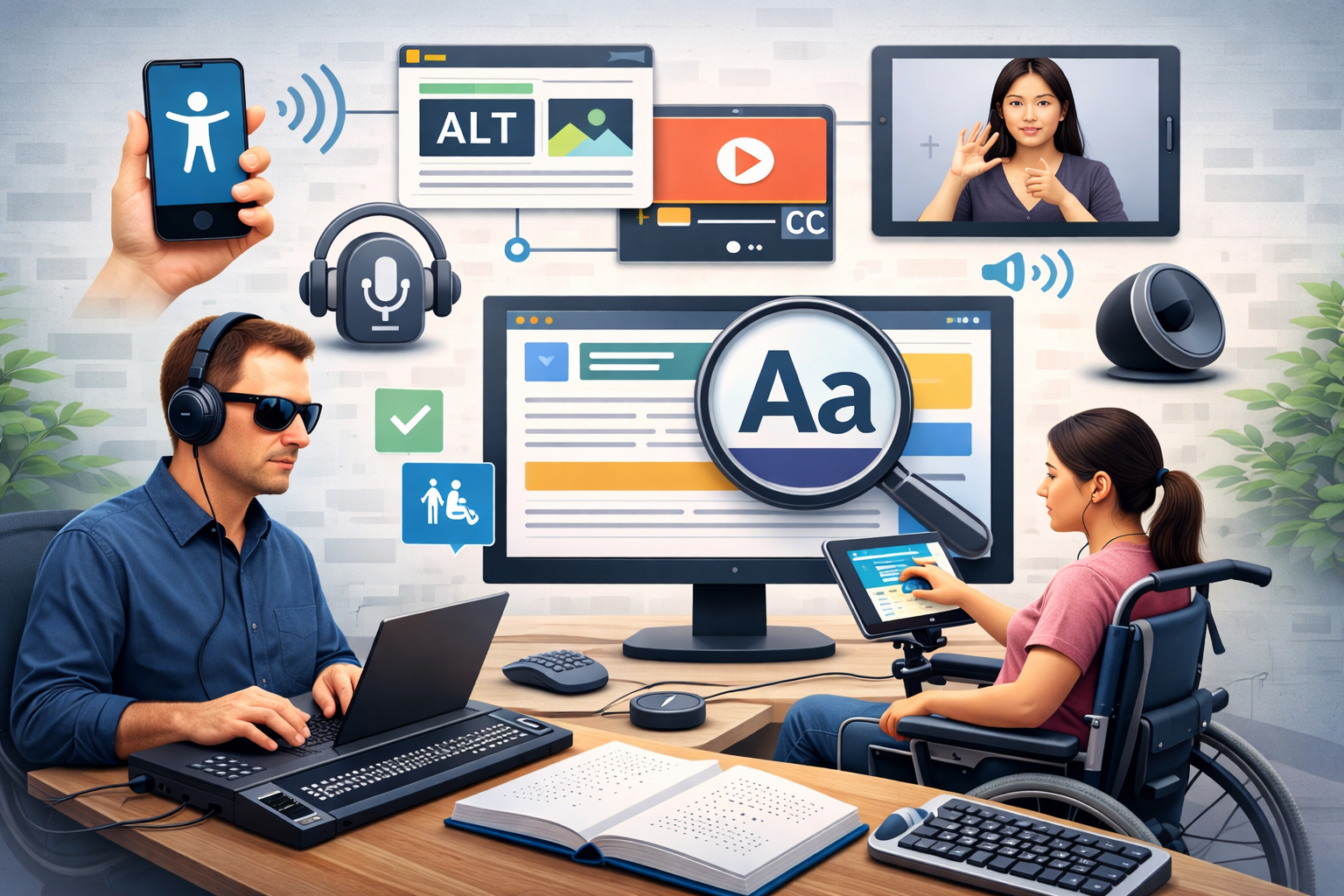
Perceivability refers to the need for information and user interface elements to be presented in a way that they can be perceived by all users. This may include providing text alternatives for non-text content, such as images or videos, enabling audio descriptions for multimedia, and ensuring that content can be resized for users with visual impairments. For example, a website that incorporates alt text for images and captions for videos exemplifies the application of this principle.
Operability emphasizes that user interface components and navigation must be operable by all users. This includes ensuring that all functionalities are accessible via a keyboard, providing sufficient time for users to read and use content, and avoiding content that causes seizures due to flashing elements. For instance, a web application that allows users to navigate through keyboard shortcuts facilitates operability for individuals who cannot use a mouse.
Understandability calls for information and the operation of user interfaces to be understandable. This principle highlights the necessity of presenting content in clear language, offering predictable navigation, and providing help and support when needed. An example would be a website that uses plain language and offers user prompts that clarify actions, thus reducing confusion for all users.
Lastly, robustness pertains to the compatibility of content with current and future user agents, including assistive technologies. This means designing web content that remains accessible as technology evolves. A site that adheres to robust coding practices and validates HTML ensures that it remains accessible across various platforms and devices.
Technical Requirements and Guidelines
Understanding the technical requirements and guidelines set forth in the 2026 standards is pivotal for designers and developers aiming to create accessible environments. These standards are designed not just to comply with legal mandates but to enhance usability for individuals with diverse needs. The following points encapsulate the essential aspects of the 2026 standards:
- Ensure that all user interface components are operable through a keyboard and alternative input methods, promoting inclusivity.
- Adopt clear and consistent navigation structures across platforms, enabling all users to familiar themselves easily with the layout.
- Incorporate visual contrast guidelines to ensure text and essential elements are easily discernible against their backgrounds.
- Provide text alternatives for non-text content, allowing screen readers to convey critical information effectively.
- Utilize proper headers and semantic HTML elements to enhance screen reader comprehension and improve overall accessibility.
 <form aria-labelledby="contact-form">
    <h2 id="contact-form">Contact Us</h2>
    <label for="name">Name:</label>
    <input type="text" id="name" name="name" required aria-required="true">
    <label for="email">Email:</label>
    <input type="email" id="email" name="email" required aria-required="true">
    <input type="submit" value="Submit">
</form>
To illustrate compliance, consider the following code sample that showcases adherence to the guidelines for a web form:
This example highlights proper use of labels, ARIA attributes, and semantic structure, all crucial for achieving compliance with the 2026 standards. Implementing such practices is essential for enhancing accessibility across various digital platforms.
Implementing the 2026 accessibility standards presents a variety of challenges for designers and developers. One of the primary issues is resource constraints, which can manifest in both time and budget limitations. Smaller organizations, in particular, may struggle to allocate sufficient resources to ensure compliance with increasingly stringent accessibility regulations. This lack of funding can hinder the hiring of experts or the acquisition of necessary tools and technologies that facilitate accessible design.
Another significant challenge is the widespread lack of awareness or training regarding accessibility standards. Many designers and developers may not be familiar with the 2026 guidelines, leading to unintentional non-compliance. Oftentimes, educational opportunities regarding accessibility are not readily available, or when they are, they do not adequately address the practical application of these standards in real-world design scenarios. This gap in knowledge can result in significant oversight during the design and development process.
The complexity of compliance also poses considerable challenges. The 2026 standards encompass a wide array of requirements, which can vary significantly depending on the context and user needs. For instance, a website may need to meet different accessibility criteria compared to a mobile application. Designing with such diverse requirements in mind can overwhelm development teams, especially those lacking experience in creating universally accessible content.
To overcome these obstacles, organizations should prioritize training and awareness programs to educate their staff on the importance of accessibility and the latest standards. Investing in user testing with individuals who have disabilities can also provide invaluable insights into practical compliance strategies. Additionally, employing a phased approach to compliance, where teams gradually implement the standards, may ease the transition and reduce overwhelm associated with meeting the 2026 guidelines.
Tools and Resources for Designing Accessible Products
As designers strive to create products that are inclusive and usable for everyone, it is essential to utilize the right tools and resources that facilitate the implementation of accessibility standards. Various software options, interactive plugins, and comprehensive guidelines can significantly enhance the accessibility of designs.
One of the primary tools available for designers is the Web Content Accessibility Guidelines (WCAG). These guidelines lay out a framework for creating accessible web content, addressing concepts such as text alternatives, adaptable layouts, and ease of navigation. Compliance with these standards ensures that designers are meeting essential accessibility criteria. Moreover, the Accessible Rich Internet Applications (WAI-ARIA) specification provides additional support for individuals using assistive technologies.
In addition to guidelines, there are numerous software solutions tailored for accessibility testing. Tools like WAVE and Axe by Deque are invaluable for evaluating web content accessibility. These tools can identify potential issues such as color contrast deficiencies and missing alternative text, assisting designers in refining their products based on user needs.
Plugins also play a crucial role, particularly for popular design platforms like WordPress. Plugins such as WP Accessibility and Accessible Poetry allow designers to enhance the accessibility of their sites without extensive coding knowledge. Additionally, the Color Contrast Analyzer helps ensure sufficient contrast ratios in text, which is vital for readability, especially for users with visual impairments.
Lastly, checklists can serve as practical quick references for designers. The Accessibility Checklist from the American Institute of Graphic Arts (AIGA) outlines essential practices to consider during the design and development process. Integrating these resources and tools into the design workflow not only ensures compliance with the 2026 accessibility standards but also fosters a more inclusive environment for users.
Case Studies: Successful Accessibility Implementations
Numerous organizations have undertaken initiatives to integrate the 2026 accessibility standards within their operations, showcasing the possibilities and benefits that arise from such compliance. One prominent case is that of a leading technology firm that underwent a comprehensive redesign of its website. Tasked with improving navigation and usability for users with disabilities, they adopted an inclusive design approach. The team conducted user testing sessions with people who have diverse disabilities, resulting in significant enhancements such as alternative text for images, keyboard-friendly navigation, and customizable interface options. Feedback indicated that users felt more empowered and included, which in turn led to increased overall engagement with the digital platform.
Another enlightening case stems from a major educational institution, which faced challenges in making its physical campus accessible. After a detailed analysis of the existing facilities, the institution implemented a multi-phase accessibility plan. This involved upgrading entrances, improving signage, and adding tactile features to assist visually impaired students and visitors. The outcome was overwhelmingly positive, with stakeholders expressing renewed confidence in the institution’s commitment to inclusivity. The incorporation of feedback mechanisms allowed the institution to continuously refine and enhance accessibility features, ensuring they remain effective and user-centered.
In the realm of public transport, a city council initiative stands out for its dedication to adhere to the 2026 standards. Through extensive community engagement and expert consultations, the council introduced features such as audio announcements at bus stops, accessible vehicle designs, and improved scheduling information through mobile applications. Users with disabilities reported a newfound independence in navigating public transit, highlighting the city’s commitment to inclusivity. These case studies serve as powerful examples of how adhering to the 2026 accessibility standards not only fosters compliance but also actively enhances user experience and societal participation for all individuals.
The Future of Accessibility Beyond 2026
As we look towards the years beyond 2026, it becomes increasingly important to predict and understand the evolving landscape of accessibility standards. The anticipated advancements in technology and societal shifts are likely to play pivotal roles in refining how accessibility is approached in various sectors, including digital interfaces, public spaces, and product design.
One prominent trend shaping the future of accessibility is the integration of artificial intelligence (AI) and machine learning (ML) into design processes. These technologies can facilitate personalized user experiences, catering to the unique needs of individuals with disabilities. For instance, adaptive interfaces that adjust based on user preferences could render applications and digital platforms more usable and intuitive, fostering inclusion.
Moreover, the rise of the Internet of Things (IoT) is expected to influence accessibility standards dramatically. Smart devices, when designed with accessibility in mind, can create a more connected and responsive environment for those with disabilities. Consider the potential of voice-activated technologies and wearable devices; these innovations could redefine how individuals interact with their surroundings and access information.
Furthermore, emerging trends point towards a growing commitment to universal design principles, which advocate for inclusivity in all aspects of design, rather than treating accessibility as an add-on. This shift will likely be supported by government policies and industry regulations that promote inclusivity as a standard practice, rather than an exception.
In conclusion, the post-2026 era holds great promise for accessibility. Through technological advancements and a redefined design philosophy, the anticipation is that future accessibility standards will create an environment that is not only more responsive to individual needs but also fundamentally inclusive for all users.
Conclusion and Call to Action
As we reflect on the importance of accessibility standards, particularly with regard to the 2026 guidelines, it becomes clear that integrating accessibility into design processes is not merely a regulatory obligation but rather a moral imperative. Throughout this discussion, we have explored how accessible design benefits everyone, enhancing user experience while broadening the reach of products and services. Compliance with accessibility standards fosters inclusivity and opens up opportunities for individuals with disabilities, allowing them to actively engage with technology and spaces.
It is essential to consider that accessibility should be an integral part of the design process, beginning from the initial stages and continuing through to completion. Designers, architects, developers, and stakeholders must all contribute to creating environments that are not only functional but equitable for all users. By paying close attention to the specific requirements outlined in the 2026 standards, professionals can help ensure that their designs accommodate diverse needs.
To actively participate in improving accessibility, consider implementing the following actionable steps in your projects: conduct regular accessibility audits to assess compliance with the latest standards; provide training for your team on accessibility best practices; and engage with users with disabilities to gather feedback and insights about their experiences. These measures can significantly enhance the usability and inclusiveness of your designs.
In conclusion, the commitment to accessibility is a journey, demanding continuous education and adaptation. By embracing the 2026 standards and taking proactive steps to improve accessibility, we can create a more inclusive world. Let us collaborate and champion design that prioritizes accessibility for all, ensuring that everyone has the opportunity to engage, participate, and thrive in our communities.



![call to action[1]](https://webically.com/wp-content/uploads/2023/10/Call-to-Action1-1024x537.png "call to action[1]")